AI vs human website design has become an important question for businesses planning their next digital investment. Artificial intelligence can now generate layouts, copy, images and code within minutes. However, a fast output does not automatically become a useful business website.
Real websites need strategy, customer understanding, testing, security, maintenance and continued development. Therefore, the strongest approach combines useful AI assistance with experienced human direction.
What Can AI Do Well During Website Creation?
AI has valuable uses within a professional website workflow. It can organise early research, suggest content structures and generate alternative ideas. Likewise, coding assistants can help developers explore solutions or reduce repetitive work. Image tools can also support mood boards, concepts and carefully controlled visual production.
These capabilities can save time when a knowledgeable person reviews every output. The problem begins when businesses confuse rapid generation with complete website design. AI provides possible material. It does not automatically provide strategy, truth, quality or accountability.
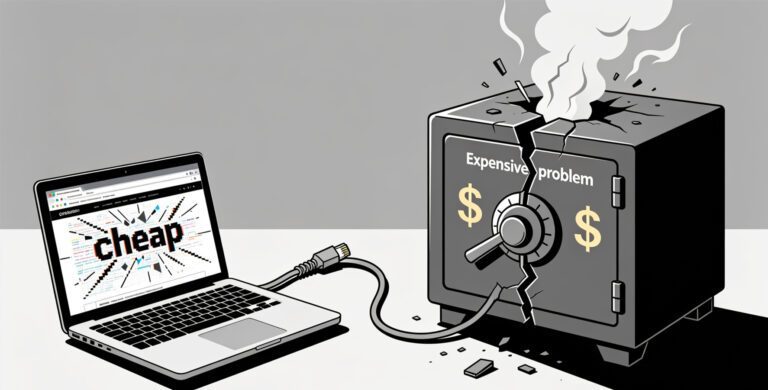
Did AI Promise You Everything and Give You Nothing?
The sales promise sounds appealing. Describe your business, choose a style and receive a finished website almost instantly. At first, the generated homepage may look modern and convincing.
Then the business tries to make a less predictable change. Perhaps the team needs a specialist enquiry form or a new product structure. Maybe the company expands into another location, service or customer group. Suddenly, the simple editing experience becomes a wall of platform restrictions. The website exists, yet the business cannot make it work properly. Many owners discover the same gap between a successful demonstration and a sustainable business tool.

Current Failures of AI Website Creation
AI website tools continue to improve. Nevertheless, several important limitations remain.
AI Does Not Truly Understand Your Business
An AI system can process the information you provide. However, it cannot independently discover every missing requirement or unspoken concern. It does not attend sales meetings, hear customer objections or recognise internal politics.
Likewise, it cannot personally understand how your reputation developed within a local market. A human designer asks questions, notices uncertainty and challenges incomplete assumptions. That dialogue often reveals the real project behind the original request.
AI Can Produce Confident Errors
Generative AI predicts plausible outputs rather than confirming truth automatically. Consequently, it can invent facts, misunderstand instructions or produce unreliable code.
The NIST Generative AI Profile identifies confabulation, privacy, security and human oversight among important risks. NIST also recommends reviewing generated code for validity and safety. A business website therefore needs human verification before inaccurate content or unsafe behaviour reaches customers.
AI Often Repeats Familiar Patterns
Generation tools learn from existing patterns. As a result, they can create competent but predictable layouts, headlines and visual styles. That sameness weakens differentiation when several competitors use similar prompts and systems.
Your brand needs more than a rearranged collection of common website sections. Human creativity can connect business personality, customer needs and cultural context more deliberately.
Automated Accessibility Checks Remain Incomplete
Accessible websites require design, development, content and testing decisions. Automated tools can identify some problems, but they cannot evaluate every human experience.
The W3C Web Accessibility Initiative recommends evaluation throughout design and development. W3C guidance also combines automated methods with human review. Therefore, generating a page does not prove that everyone can understand or operate it.
Security Needs Continued Human Accountability
Security is not a box that anyone can tick permanently. Web platforms, extensions, integrations and threats continue to change after launch. Updates can also introduce conflicts, so responsible maintenance includes backups and testing.
The WordPress security guidance explains that every system needs sensible precautions. AI may help identify issues, but a person must decide, implement and verify the response.
SEO Needs Value, Not Automated Volume
AI can create large amounts of content quickly. However, quantity does not replace relevance, expertise or original value. Google’s guidance on generative AI content prioritises accuracy, quality and relevance. Google also warns that mass generation without added value may breach its spam policies.
Human contributors provide genuine experience, evidence, opinions, examples and business knowledge. Those qualities help content serve people instead of merely filling pages.

The Restrictive Nature of Some AI Website Platforms
Not every AI website builder imposes the same restrictions. Nevertheless, businesses should investigate several important limitations before committing.
Editing Restrictions
Can you change individual layouts without regenerating the whole section? Can your team edit menus, forms, templates, metadata and responsive behaviour? A quick builder may become slow when routine changes require awkward workarounds.
Custom Functionality Restrictions
Can the website support your real booking, sales, membership or operational workflow? Does it connect properly with current and future business systems? If the platform only offers fixed components, unusual requirements can become impossible.
Ownership and Portability Restrictions
Can you export the complete website and host it elsewhere? Can you keep independent backups of its files and data? Provider policies vary significantly. For example, Wix states that users cannot currently create an external backup of a complete Wix Editor site.
Its official backup guidance instead directs users towards the platform’s Site History. That example does not make every hosted builder unsuitable. However, it demonstrates why businesses should check portability before choosing any proprietary platform.
Growth Restrictions
Can the website add new services, locations, languages, products or user roles later? Will the information architecture remain clear after those additions? Future growth becomes expensive when the original structure only supports today’s smallest requirement.
Support Restrictions
Who takes responsibility when something fails? Automated help may repeat instructions without understanding the wider technical context. A human specialist can inspect the problem, consider its consequences and explain practical options.
AI vs Human Website Design: A Practical Comparison
Discovery
AI works from submitted instructions and available patterns. Human designers question the brief, uncover gaps and interpret commercial context.
Brand Direction
AI can generate rapid visual variations. Humans can judge which direction feels distinctive, appropriate and credible.
Custom Flexibility
AI builders usually work within predefined platform controls. Human developers can adapt code, templates, content models and integrations where appropriate.
Accuracy
AI output can sound confident while containing errors. Human experts can verify facts, code and business claims before publication.
Security
AI can assist checks and repetitive analysis. People remain responsible for risk decisions, updates, testing and incident responses.
Maintenance
An automated launch completes an initial generation task. Human support continues as content, technology and business priorities change.
Accountability
AI cannot accept commercial responsibility for a failed website. A professional designer can explain decisions, correct problems and support agreed outcomes.
Human Website Design Allows Real Adaptation
A good website should fit the business instead of forcing the business into a template. Human-led planning connects the website with current operations and likely industry development. For example, new regulations may change required information or customer consent.
Market changes could introduce different services, audiences or sales journeys. The company may also need new integrations as internal systems develop. Manual and custom development provides more routes for adapting those areas.
Moreover, a flexible content management system lets authorised teams update appropriate content themselves. That control reduces dependence on one rigid generation process.
No Website Remains Future-Proof Without Work
The phrase “future-proof website” can create another unrealistic promise. No platform can guarantee compatibility with every future technology or business requirement. Instead, businesses should aim for future readiness.
A future-ready website uses maintainable foundations, documented access and sensible content structures. It also receives regular backups, updates, checks and improvements. Consequently, change becomes a manageable process rather than an emergency rebuild.
Is Replacing People With AI a Silver Bullet?
Some companies have reduced teams because they expect AI to deliver equivalent work at lower cost. Treating that assumption as a universal solution appears naive and short-sighted. Removing experienced people can also remove judgement, customer knowledge, creativity and accountability.
Those capabilities become more important when an organisation adopts an immature or fast-changing technology. The evidence supports a more balanced view of employment.
The International Labour Organization’s 2025 research found that job transformation remains more likely than complete replacement. Meanwhile, the World Economic Forum’s Future of Jobs Report 2025 projected substantial job creation alongside displacement. Its findings also emphasised creative thinking, resilience, flexibility and agility. Therefore, companies should redesign work thoughtfully instead of removing expertise before AI can operate safely.
New roles will support AI governance, training, evaluation, integration, security and quality control. Existing roles will also evolve as people learn to use AI within their specialist fields. People must also govern and regulate increasingly capable systems before unsafe use spreads beyond control.
Human involvement does not prevent progress. It helps organisations direct progress responsibly.
The Better Model Is Human-Led and AI-Assisted
The debate should not end with a complete rejection of AI. Used responsibly, AI can improve parts of the website process. It can accelerate exploration, summarise research and support repetitive production work.
However, humans should define the goal, challenge the output and accept responsibility. A designer brings empathy, taste, experience and customer understanding. A developer brings technical judgement, testing and maintainable implementation.
The client brings essential knowledge about the business and industry. AI then becomes a useful tool within a capable team.
Questions to Ask Before Using an AI Website Builder
Before committing, ask the provider these questions:
- Is a complete website export available for migration elsewhere?
- Who owns the content, images, data and generated code?
- Are independent backups available outside the provider’s platform?
- Can authorised users edit every important page, template and navigation item?
- Does the platform support custom functionality and third-party integrations?
- How does the platform manage security and software updates?
- What happens when an update breaks an important feature?
- Do I control SEO titles, descriptions, redirects and structured information?
- How will I test accessibility across real customer journeys?
- Will the website support new services, locations or products later?
- Who provides accountable help when automated support fails?
- What happens to my website if I cancel the subscription?
Clear answers reveal whether the apparent shortcut supports long-term business needs.
What Should You Do With an Unusable AI Website?
Start by preserving access to your domain, content, images, analytics and business data. Next, document every current problem and desired future requirement. Avoid deleting the existing website before reviewing its search visibility and valuable content.
A professional review can then identify what to retain, improve, migrate or rebuild. Devon Design offers AI website rescue and human-led website design for businesses needing a practical recovery plan.
Choose a Website Built for People and Progress
AI can generate an attractive starting point. Nevertheless, your business needs more than a starting point. It needs a website that supports customers, staff, marketing, security and future development. Human-led website creation provides the discovery, flexibility and accountability that automated generation cannot guarantee.
Therefore, use AI where it adds value, but keep skilled people in control. Contact Devon Design to discuss a new website, redesign or AI website rescue project.