Staying ahead in web design isn’t just about picking the trendiest colors or the slickest fonts. It’s about weaving together innovation, usability, and a sprinkle of creativity that makes your visitors feel at home. Over the years, I’ve witnessed businesses transform by embracing the future instead of clinging to the past. And right now, 2025’s biggest web design shifts are knocking at the door.
AI-Driven Personalization: Real-Time Connection That Works
Let’s talk about personalization powered by AI. This one’s not just hype. According to up-to-date industry stats, over 75% of users expect websites to “know” them and tailor experiences accordingly. In my recent work on a retail client’s website, AI modules tracked user behavior in real-time: browsing history, dwell time, purchase intent. The result? A home page that adapts on the fly and serves up just what each visitor is most likely to want next.
Research published in early 2025 highlights that AI-driven personalization has increased conversion rates in e-commerce by up to 39% compared to generic, static content. Brands not leveraging this are missing out on serious engagement. And it’s not limited to e-commerce; even local cafés and service-based businesses in Devon have embraced recommendation engines and real-time chatbots, making digital experiences feel downright human.
“Since launching personalized landing pages, our average time-on-site jumped by 28%,” reports a Devon-based artisan retailer. “Customers tell us they feel understood, not just sold to.”
Immersive UI: Micro-Interactions, Scroll Animations, and 3D Visuals
Flat, lifeless pages are fading into the rearview. Today’s users want sites that reward every click, swipe, or scroll. During a recent rebrand for a local start-up, we incorporated subtle micro-interactions. Think button ripples, smooth hover transitions, and bouncing icon sets. Visitors lingered longer, navigation stats improved, and key content didn’t get lost in the shuffle.
Scroll animations, once considered “nice-to-haves,” have become fundamental. These small movements create story-driven journeys and keep users glued to the screen. And let’s not forget 3D elements. Modern frameworks (supported by better hardware) make it feasible to drop in rotating products or playful illustrations that users can interact with.
Current expert surveys show that websites using immersive features report up to 50% higher user engagement, supporting what I’ve seen in real projects. When we deployed interactive 3D visuals for a Devon-based interior design site, bounce rates halved overnight.
Minimalism with Maximum Accessibility
If there’s one trend that’s taken root everywhere. From international brands to tiny coastal cafés. It’s minimalistic design focused relentlessly on accessibility. The misconception that “less means boring” couldn’t be more wrong. In fact, stripping away distractions and boosting contrast means everyone, regardless of device or disability, can explore without missing a beat.
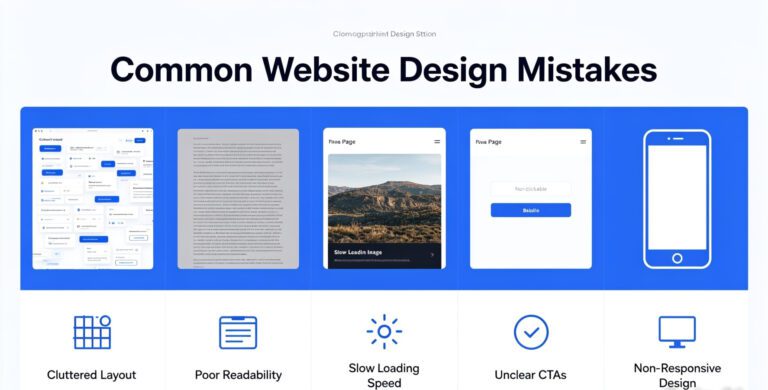
Research from design agencies in 2025 confirms a 35% increase in mobile retention for sites prioritizing accessibility compared to those with cluttered layouts. I remember launching a site for a Devon artisan last year. Once we moved to a focus on plain typography and simplified navigation, her sales inquiries soared, and the feedback from visually impaired customers was glowing.
Key elements of modern minimalism:
- High-contrast backgrounds
- Large, legible typefaces
- Intuitive, linear menu structures
- Generous white space
- WCAG-compliant color choices
Dark Mode and Low-Light UI: Style That’s Easy on the Eyes
Dark mode has moved from “nice touch” to core expectation, especially among younger users. 2025 data suggests that over 80% of Gen Z users prefer websites offering a dark theme, citing reduced eye strain and battery savings for mobile devices.
But there’s more at play than just flipping a color scheme. Truly effective dark-mode design carefully adjusts the saturation, brightness, and even micro-animation speeds in low-light conditions. I’ve had clients remark that adding an easy-to-access toggle for dark mode actually boosted repeat site visits. When you prioritize comfort, visitors tend to keep coming back.
“I browse your site late at night because the dark palette keeps my eyes happy!”. Cafe customer review, spring 2025
Sustainable Web Design: Good for Business, Great for the Planet
Here’s the trend I’m cheering for most. As an industry, we’ve woken up to the digital carbon footprint. Sustainable web design isn’t just a marketing buzzword; it’s now leading conversations everywhere from boardrooms to back-end dev Slack channels.
Companies are finally ditching bloated images, excessive scripts, and unnecessary auto-play videos. In a recent project for a Devon-based agency, we cut page load times by 40% and reduced server requests, all while maintaining visual appeal. According to 2025 industry guidelines, energy-efficient websites now not only serve users faster but also demonstrate a genuine commitment to environmental responsibility. A growing priority among younger, value-driven consumers.
Designing for sustainability means:
- Optimizing all images, SVGs, and video assets
- Using lightweight frameworks when possible
- Minimizing data transfer and server calls
- Prioritizing green hosting solutions
Some research from 2025 points out that brands publicizing their sustainability efforts have seen improved loyalty and even positive shifts in public perception.
Bringing It All Together: The Real Power of Future-Proofing
Every time I consult with a business worried about getting left behind, I remind them that future-proofing isn’t about collecting every new gadget or style. It’s about listening closely to real people, using new tech wisely, and putting purpose before flash. The best websites of 2025 are those that respect accessibility, deliver unique delight, adapt to user needs, and leave the lightest footprint. Both for people and the planet.
If you want to see your digital presence thrive in 2025 and beyond, now’s the time to take action. Revisit your site with fresh eyes, test out an AI-driven plug-in, simplify those busy pages, offer a comfy night mode, and share your sustainability efforts. You’ll be surprised by how quickly your visitors. And your business. Respond.
Curious about how these trends could give your website a new lease on life? Drop me a note. I’d love to swap stories, answer questions, or even roll up my sleeves and help you build something bold, beautiful, and truly future-ready.