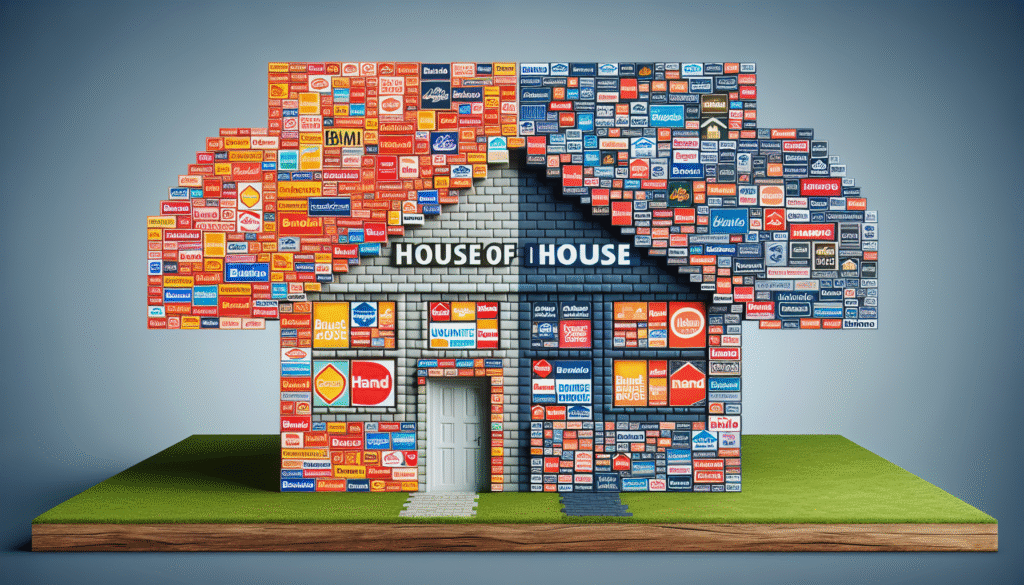
When it comes to organizing multiple products, services, or brands under one umbrella, brand architecture isn’t just a nice-to-have. It’s essential. A solid structure keeps things clear not only for your team but for your customers too. If you’ve ever wondered why Google’s products all feel cohesively connected, or why you didn’t realize Unilever owned both Dove and Ben & Jerry’s, you’re already bumping into the impact of brand architecture.
Let’s dive into the two most common approaches: Branded House and House of Brands. Understanding how they work, and which fits your business best, can save you loads of time, money, and confusion down the road.
What Is Brand Architecture, Really?
Brand architecture is how a company organizes and manages its portfolio of brands, sub-brands, products, and services. It defines the relationships between them and clarifies how each one supports, competes with, or stands apart from the others.
There are three primary models, but the two you’ll hear about the most are:
- Branded House: Everything falls under one master brand.
- House of Brands: Independent brands operate under a corporate parent, often without any public connection to it.
Each model comes with its own quirks, advantages, and challenges.
Branded House: One Brand, Many Faces
A Branded House strategy means your individual offerings live under one main brand umbrella. Think Google. Whether it’s Gmail, Google Maps, Google Drive, or Google Photos. It all carries the “Google” name. Users immediately recognize and trust the products based on their familiarity with the parent brand.
Upsides? Plenty:
- Unified brand equity: Every product contributes to the strength of the core brand.
- Marketing efficiency: You’re essentially promoting one brand, not several.
- Customer trust: New products benefit from the reputation of the parent instantly.
But here’s the rub. If something goes wrong. Say a product flops or a controversy hits. It could impact the entire brand ecosystem. I’ve seen startup founders struggle with this. One client of mine launched three services under one brand with great initial buzz. But when one area faltered, they found themselves in damage control across all product lines because the public couldn’t separate them.
If you’re building in a tight niche with connected products, this model is gold. But tread carefully if you’re experimenting with unrelated markets.
House of Brands: One Parent, Many Children
Now flip the coin. A House of Brands features a parent company that owns multiple distinct brands, each with separate identities, missions, and audiences. Unilever and P&G are masterful at this.
Unilever owns Dove, Hellmann’s, AXE, Lipton, and many more. None of these scream “Unilever” in their ads or packaging. The brands stand on their own, targeting different demographics and conveying distinct voices.
So, what’s the advantage?
- Flexibility: Each brand can operate independently, even if others fail.
- Tailored messaging: You can totally customize product identity to specific customer segments.
- M&A-friendly: Acquiring or sunsetting brands is easier when they’re not tightly tied to the parent.
The downside? It’s expensive. Managing dozens of brand strategies requires more investment, more coordination, more everything. During a consulting stint at a large multinational, I watched their team juggle conflicting brand calendars, overlapping campaigns, and internal turf wars. It wasn’t pretty.
When Should You Rebrand or Shift Architectures?
Redefining your brand structure isn’t something you do on a whim. But here are a few signs it might be time to reconsider:
- Acquisitions or mergers: Bringing new entities into the fold may require a structure realignment.
- Confused customers: If people can’t tell your offerings apart, or misunderstand what your brand stands for, that’s a red flag.
- Brand dilution: Too much under one name can make everything feel generic or watered down.
- Global expansion: What works in one region may not resonate in another.
Rebrands can be strategic, not just cosmetic. Look at Facebook’s decision to rebrand its parent company as Meta in 2021. That move separated the corporate structure from its social platform, clearing room to grow into new spaces like virtual reality and AI without dragging the Facebook baggage with it.
Real-World Showdown: Google vs. Unilever vs. P&G
Let’s look at how some giants do it.
Google - Branded House
For Google, keeping everything under one trustworthy name increases transparency and user loyalty. Almost every product carries the “Google” stamp, and the synergy across services builds confidence (and tons of data-sharing efficiencies).
Their architecture makes it easy to cross-promote (“Sign into Google to access X”). It’s tight, controlled, and consistent.
Unilever - House of Brands
Unilever is the textbook definition of this model. You won’t catch casual consumers linking their favorite tea brand to a multinational parent. That’s intentional. It lets each product build its own emotional connection with its customers. And fail, if necessary, without dragging down the rest of the portfolio.
When Dove builds campaigns around beauty confidence and AXE goes all-in on bold masculinity, there’s no brand clash. Because they exist in separate silos.
P&G - Hybrid, But House of Brands at Heart
Procter & Gamble is somewhere in the middle, leaning towards House of Brands. You’ve got Tide, Pampers, Gillette. All strong enough to exist independently. In recent years, they’ve started linking some product lines more intuitively, crafting subtle brand families, but not enough to push them into Branded House territory.
From personal experience working with a health-focused startup modeled after P&G, structuring each supplement line as its own microbrand helped us resonate with niche audiences. Elderly users, athletes, parents. Without trying to stretch one brand to fit them all. Growth was measured, but loyal and meaningful.
Picking the Right Model for You
Choosing a brand architecture isn’t about being trendy or copying whatever Apple or Coca-Cola is doing. It’s about fit. Ask yourself:
- Is your product line cohesive in experience and purpose?
- Do you want to expand into very different markets?
- Can you support distinct brand teams (think staff, budget, bandwidth)?
- Do your customers associate trust with your company name, or your product’s name?
No single model is “better.” It all comes down to strategy, resources, and vision.
Final Thoughts
Your brand architecture can either propel your company forward. Or tie it down like an anchor. Get it right from the start, or reevaluate it before messy misalignment becomes a growing pain you can’t ignore.
Building a House of Brands or cultivating a Branded House is less about preference and more about purpose.
Want honest feedback on your current architecture? Or need a gut check on whether a rebrand makes sense? Drop me a line. Happy to chat openly. No jargon, no pitchy nonsense.
Frequently Asked Questions
What is the main difference between a House of Brands and a Branded House?
A House of Brands houses multiple independent brands with separate identities, while a Branded House operates under a single dominant brand. The key difference is how brand equity is managed. Shared across products in a Branded House, versus isolated by brand in a House of Brands.
Can a company switch from one architecture to the other?
Yes, but it’s a major undertaking and must be strategically planned. Google could theoretically spin off its products into standalone brands, just as Facebook did by forming Meta. That said, transitions involve cost, customer education, and brand equity realignment.
Is one model more popular among startups?
Startups often begin with a Branded House due to limited resources. It’s easier to market one brand than many. As they scale or diversify, some shift to a House of Brands model to target different segments without overextending their main brand.
How do I know when it's time to rebrand my architecture?
If your brand strategy feels cluttered, customers are confused, or you’re entering vastly different markets, it’s worth reevaluating. Also, significant business changes like mergers, acquisitions, or mission pivots often prompt architectural reviews.
Are hybrid brand architectures a good idea?
They can work well, especially for large or transitional companies. P&G’s model allows them to keep most brands separate while applying subtle groupings by product category. Hybrids offer flexibility, but without clear rules, they can get murky fast. A hybrid works best when there’s a clear strategy for what stays linked and what doesn’t.