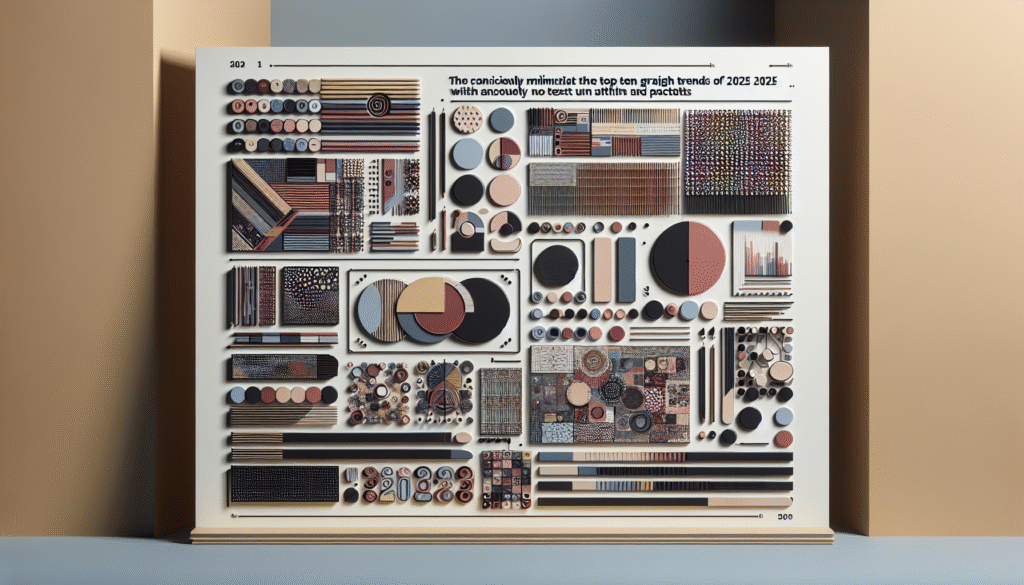
If you’re a designer, you’ve probably already felt the shift. Maybe it’s that subtle unease when opening last year’s portfolio, or that buzz you get stumbling across a wild new style on your feed. Whether you’re deep in the trenches of branding projects or just brushing up on what’s hot, exploring the 2025 design trends can be equal parts exhilarating and overwhelming.
Let’s dig into what’s making waves this year. And what’s quietly fading into the background.
1. Generative AI: The New Collaborator
By now, AI isn’t just a buzzword. It’s your new creative co-pilot. Tools like Midjourney, DALL·E 3, and Adobe’s Firefly are letting designers create stunning visuals with a few well-chosen prompts. But here’s the kicker: the real magic isn’t in the tech itself. It’s in pairing it with genuine design thinking.
I recently worked on a rebranding project for a startup in the eco-space. We used generative AI to explore dozens of visual directions in a matter of hours. Mocking up color palettes, textures, and even poster layouts. But the key was curating and refining the output to match the brand’s ethos. AI sparked the ideas; human hands made them meaningful.
That said, don’t rely blindly on it. Overused, AI art starts to feel… soulless. Use it to brainstorm, not to autopilot.
2. Textured Imperfections: The Polished Rough Look
Flat design isn’t gone, but it’s gotten a bit of sandpaper treatment. Real-world textures, grainy overlays, visible brush strokes. These aren’t mistakes. They’re features.
Why the shift? There’s a craving for realness in digital design. People want to see the hand behind the art. Blame it on screen fatigue or nostalgia, but hand-painted aesthetics and analog vibes are back in a big way.
One of my favorite recent projects involved creating packaging for a local bakery. We layered subtle paper textures and rough ink prints to give it that handmade touch. It looked warm, human. And let’s be honest, kind of delicious.
3. Collage & Mixed-Media Mashups
2025 is the year of creative chaos. Cutouts, paper tears, 90’s-style photocopy borders, bold clippings. Think zine culture meets digital renaissance.
Designers are leaning into eclecticism, putting unlikely elements together and letting them clash in beautiful ways. The key here is balance. It shouldn’t look like your Canva file exploded. Strategic layering, thoughtful contrast, and intentional asymmetry turn a mess into magic.
Pinterest, Behance, and even TikTok are flooded with these wild style studies. And they’re not just for youthful brands. Corporate clients are starting to dip a toe, especially in social media campaigns and internal culture pieces.
4. Retro-Futurism: Nostalgia with a Sci-Fi Twist
We’re living in a timeline where VHS aesthetics, glitch textures, and pixel fonts feel fresh again. The blend of 80’s optimism with a tech-forward focus results in what’s being dubbed retro-futurism.
Used correctly, this isn’t just for fun. This trend evokes both innovation and comfort. Ideal for brands trying to ride that line.
I recently consulted on a fintech visual refresh that ran with this theme. Neon gradients, holographic-style illustrations, and patterns inspired by 90s arcade UI gave it an edge while hinting at reliability through nostalgia.
5. Kinetic Typography: Words That Move You (Literally)
Static text? Boring. Designers are letting type dance, expand, bounce, and pulse. It’s not just motion graphics; kinetic typography is creeping into web design, ads, and explainer videos.
But here’s the deal: it has to have purpose.
Poorly timed motion can feel gimmicky or worse. Completely distracting. On a recent project for a nonprofit’s awareness campaign, we used subtle movement on key stats, helping viewers absorb the numbers emotionally and visually. It worked. Engagement rates doubled.
6. Maximalism with a Mission
Minimalism will always have its place. But 2025 is leaning into more. More color. More elements. More emotion.
But it’s not chaos for chaos’ sake. There’s intention behind it. Using rich visuals to tell deeply layered stories.
You’ll see this in activist graphics, fashion label identities, and even B2B tools that really want their brand to stand out. When done right, it feels immersive and bold. Not cluttered.
7. AI-Assisted Branding Systems
AI isn’t just for image generation anymore. It’s shaping full-scale brand systems. Typography pairings, scalable layout logic, color hierarchy. All can be AI-tailored in real time using smart frameworks.
Adobe’s Creative Cloud 2025 update now includes AI-powered design suggestions based on UX data, color psychology, and accessibility standards. That’s huge.
But let’s be crystal clear: AI knows the rules. Designers know when to break them.
8. Editorial Layouts in Digital Spaces
Think magazine spreads gone digital. Overlapping headlines, columns, negative space. All traditionally print elements. Are finding their way into web and mobile experiences.
It gives digital a tactile feel, which pairs nicely with this year’s push for authenticity.
As someone who started out designing indie zines in the early 2000s, seeing these principles come full circle is a little surreal. But very welcome.
9. Typographic Experiments
Variable fonts. 3D type. Type that mixes scripts, languages, or breaks the rules entirely. Typography as a visual centerpiece is big this year.
Designers are no longer treating type as supporting cast. It’s the star. Brands are launching with custom fonts, or even using typography as the logo itself.
The key? Legibility and personality. If your type is cool but unreadable. You’ve lost the plot.
10. Eco-Conscious Visuals
With sustainability becoming non-negotiable for brands, the visuals have followed suit. Natural tones, biodegradable textures, and soft, earthy palettes are stepping up.
Greenwashing won’t cut it anymore. Design has to walk the talk. Using visuals that reflect ethical sourcing, mindfulness, and environmental responsibility.
I worked with a zero-waste packaging startup that scrapped glossy, synthetic aesthetics and leaned into raw, gritty visuals. It resonated deeply with their audience and aligned with their mission.
Trends on the Way Out in 2025
Let’s be honest. Some styles have overstayed their welcome. Here’s what to give a rest (for now):
- Overly sterile minimalism: Feels emotionless in today’s expressive landscape
- Stock photos with fake diversity: Consumers see through the inauthenticity
- Hyperglossy 3D graphics: Unless you’re in gaming or crypto. It’s time to tone it down
- Generic sans-serif branding: Distinct type is where it’s at
- Mindlessly flat illustrations: Especially those corporate figures with noodle arms (you know the ones)
How to Bring These Trends into Your Workflow
Feeling inspired is great. Bringing it to life? That’s the part that matters.
Here’s how to get there:
- Experiment with AI: Start small. Use it to concept, then take the wheel
- Build a visual trend board: Curate influences that balance new ideas and brand identity
- Layer and texture your work: Subtly add depth. Not every flat needs to stay flat
- Stay curious: Trends change fast. Carve out time every month to notice them
And as always. Trust your gut. Design trends are only helpful if they align with your vision.
Frequently Asked Questions
What is generative AI in graphic design?
Generative AI refers to tools that can create original images, layouts, or visual styles based on text prompts or example inputs. In graphic design, it’s often used for idea generation, mood boards, or even final assets with professional curation.
Are these 2025 design trends suitable for all industries?
Not every trend fits every brand. For instance, a law firm might not benefit from a retro-futuristic overhaul. But layering organic textures or kinetic type subtly into their branding could add a modern touch without losing professionalism.
Will AI replace graphic designers?
No. Design is about more than just producing visuals. It’s strategy, emotion, communication, and context. AI is a tool, not a replacement. Designers who embrace it will enhance their creativity and speed, not lose their value.
Where can I explore examples of these trends in practice?
Platforms like Behance, Dribbble, and Pinterest are great for trendspotting. Follow design studios, creative directors, and illustrators pushing boundaries. You’ll get a feel for how trends evolve in real time.
How do I know which design trends will work for my brand?
Start by revisiting your brand’s goals, audience, and values. Then explore which aesthetics support that story. You don’t have to chase every trend. Just the ones that help you communicate better.
Feeling inspired? Now it’s your turn to try something new, get your hands dirty, and explore what design can look like in 2025. Break the rules, test the limits, and stay ahead of the curve. Not because it’s trendy, but because it pushes your voice forward.