Let’s be honest: keeping up with how users interact with websites is no small feat. One minute, people are happily scrolling through your desktop layout, and the next, they’re barking voice commands at a smart speaker or swiping through an AR-enhanced brochure on their phones. Welcome to 2025, where user experience isn’t just part of web design. It is the web design.
And through all the tech evolution and trend cycles, one thing remains solid: human-centered design. It’s not a buzzword. It’s the beating heart of every website that doesn’t make you want to throw your phone halfway across the room.
UX Fundamentals That Aren’t Going Anywhere
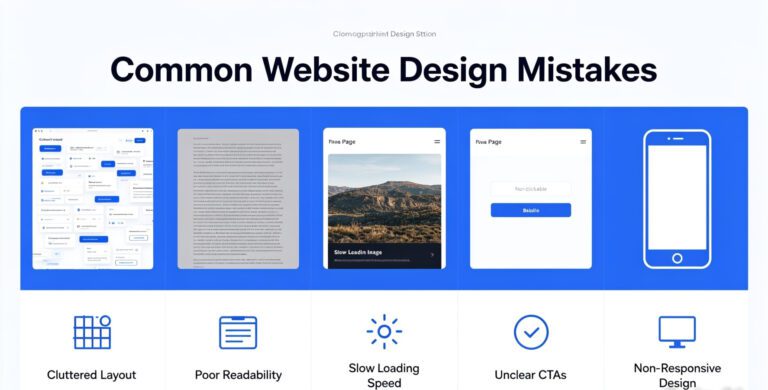
You can slap all the flashy visuals and snazzy transitions on a website, but if it’s confusing, slow, or overwhelming, users bounce. Fast.
Some principles are timeless for a reason. These are the core UX fundamentals that still stand tall in 2025:
- Clarity: Users need to know what they’re looking at in seconds. Clear navigation, legible text, and intuitive structure aren’t negotiable.
- Efficiency: Time’s precious. Smarter, streamlined pathways win over flashy animations.
- Accessibility: With over 1 billion people globally living with some type of disability (WHO, 2022), inclusive design isn’t optional. It’s essential.
- Feedback loops: Whether it’s a subtle animation after clicking a button or a helpful error message, users want to feel heard.
Having worked on several redesign projects for South West businesses. Everything from B2B tech platforms to quirky family-run cafés. I’ve seen firsthand how returning to these basics consistently improves bounce rates, increases conversions, and, crucially, makes people feel good using your website.
AI, AR, and VR Are Reshaping UX. But Not Replacing It
There’s no denying we’re in deep with tech. Tools like ChatGPT (you’ve met?) are reshaping expectations for immediacy and personalization. AI is now embedded in everything from content recommendations to predictive search bars that finish your sentences better than your partner.
But while tech turbocharges interaction, it still needs human sensitivity. I worked with a local Devon surf brand recently. They added an AI chatbot for gear recommendations. Great idea, poor execution. It assumed someone mention “board” = skateboard, skipping over its actual surfboard roots. Fixing that required real conversations with customers and, yes, rewriting the bot’s logic in a way that reflected actual user expectations.
AR and VR? They’ve gotten stronger in education and retail. We’re seeing beauty brands let you “try on” makeup virtually, and real estate sites offer 360° walkthroughs. But again, if it overwhelms or disorients, it fails the UX test.
Designing for a World Beyond Screens
This one’s big. Screens aren’t always part of the experience anymore. With smart assistants, wearables, and even in-car browsers, user interactions now extend beyond fingers and eyes.
Adaptive design. Not just responsive. Is the new standard. That means content and navigation that adjusts not just to screen size, but to context. Are users moving? Trying to multitask? Driving?
When we worked with a Devon-based farm shop transitioning to online delivery, we had to test their ordering system across a smart fridge, a smartphone, and a smart speaker. The takeaway? Users ordering on the go often skipped steps. So we shortened the flow, added voice prompts, and tested every possible path. It paid off: repeat orders from mobile and voice jumped 38% within two months.
UX Powers up Your SEO and Your Brand
This surprises people outside the industry: great UX enhances SEO. Google’s core web vitals measures. Like loading speed, interactivity, and visual stability. Are directly tied to UX. If people leave your site frustrated, bounce rates go up, rankings go down. No magic tricks there.
But here’s where it gets even better. Thoughtful UX builds loyalty. When your website respects people’s time, needs, and habits, they trust you. They come back. They recommend you.
We rebuilt a florist’s site in Exeter late last year. Nothing high-tech, just clean design, accessible forms, and better mobile flow. Six months in, not only did organic traffic grow, but customer referrals jumped 22%. Turns out, people appreciate when things just work.
“It feels like this site was made for someone like me.” . Direct user feedback from a Devon-based client survey
That’s the win. When your users see themselves in your design, they stick around.
Devon Businesses Leading the UX Charge
Plenty of local brands are stepping up, and it’s inspiring to see. A few standouts:
- SeaStem (Plymouth): Their digital plant delivery platform nails conversational UI. It feels like chatting with a knowledgeable friend, not digging through complex menus.
- Mocha Coast Café (Brixham): With tactile feedback on mobile, soothing colours, and voice order compatibility, their site feels like a warm hug in website form.
- ForgeTech (Exeter): B2B doesn’t mean boring. ForgeTech’s UX revamp introduced customizable dashboards for their clients, boosting platform engagement by over 60%.
These aren’t million-pound brands. They’re local teams investing in real connections through smart, empathetic design.
The Road Ahead: Where UX Heads Next
User expectations aren’t slowing down. In fact, they’re getting sharper, more nuanced, and frankly, a little less patient.
Here’s what we see shaping design looking forward:
- Real-time personalization driven by more ethical data processing
- Micro-interaction mastery. Those tiny touches matter more than ever
- Empathic interfaces, like interfaces that respond to tone, mood, or environment
- Less interface. More voice, gesture, and ambient interaction design
If that sounds like sci-fi, just think: five years ago, most folks weren’t talking to their thermostats or using AI to write content. Yet here we are…
Final Thoughts
The future of UX isn’t about jumping on every shiny new tech. It’s about staying grounded in what works: deep empathy, clarity, and a real respect for the person on the other end of the screen. Or speaker, or headset, or whatever comes next.
Whether you’re a small Devon business or a growing global brand, the same truth holds: design with humans in mind, and the future belongs to you.
Let’s build better, bolder, and yes. More human. Experiences together. Ready to rethink your website? Give us a shout. We’re all ears.