The days of painstaking manual wireframing and endless revisions are shifting. Fast. It’s 2025, and web design now sits at the intersection of code and creativity, with AI and automation reshaping not just how we build websites, but how we think about them altogether.
I still remember working late nights in 2017, wrestling with layout decisions and praying that mobile responsiveness wouldn’t break halfway through review. Today? Tools exist that can auto-generate full wireframes based on content goals. That’s not science fiction. It’s happening now.
The Rise of AI-Driven Design Platforms
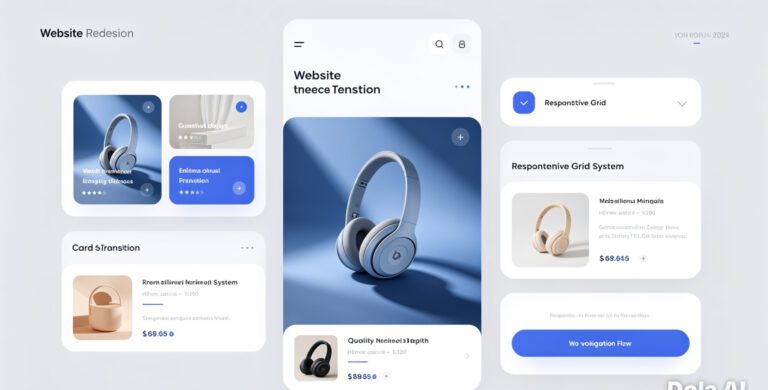
AI design tools like Framer, Uizard, and Adobe Firefly have taken a massive leap forward in the last couple of years. What used to be clunky or gimmicky software now provides meaningful assistance, adapting based on best practices and hard data. These platforms can instantly spin up page structures, suggest layout alternatives, and even adjust colour palettes based on a brand’s psychological target audience.
Here’s the game-changer: they reduce the friction between idea and execution. Founders with minimal design experience can input their vision and get a solid prototype within minutes. Small agencies (like the one I freelance for in South Devon) now use AI-enhanced design previews for client approvals. Cutting revision rounds in half.
But this doesn’t mean we’re handing the wheel over completely.
Automation in the Creative Process: The Perks and Pitfalls
AI knocks it out of the park for repetitive or analytical tasks: arranging grid systems, resizing images, optimising loading speeds, or A/B testing layouts. It makes life easier. No question.
That said, creativity isn’t just about speed. It’s about context. While an AI might lay out a clean design, it doesn’t know the founder’s personality, or the quirky story behind why a microbrewery in Totnes chose seafoam green as a brand colour.
And believe me, I’ve seen what happens when teams rely 100% on automation. One client launched a site generated almost entirely by AI. It was polished, but it felt… soulless. Visitors spent less time on-page, bounce rates increased, and conversions tanked. After a full human-centred redesign six months later, engagement jumped by 43%.
Personalisation Gets Smarter
If there’s one thing AI gets really right, it’s how it uses data to personalise. Modern websites can now adapt content, visuals, and even navigation paths based on real-time user interactions. That kind of dynamic experience just wasn’t possible even a few years ago.
We’re seeing this across the UK in e-commerce sites that reshape homepage offers based on your browsing behaviour, or B2B companies that tailor their chatbot responses using historical lead data.
According to a 2024 joint study by the Nielsen Norman Group and UX Alliance, websites that employed adaptive interfaces saw an average 27% increase in user retention over static sites.
But here’s the kicker: personalisation without empathy is creepy. Just because a system can detect you glanced at red ankle boots doesn’t mean it should shove them in your face on every scroll. Finding that balance is precisely where human designers are still vital.
Why Human-Centered Design Still Matters
Despite all the bells and whistles AI brings, people still want to feel heard. They want websites that reflect human experiences. Not just optimised funnels.
Human-centered design isn’t a buzzword. It means paying attention to body language during interviews, noticing user hesitation mid-test, and reflecting brand tone in microcopy. Those layers of nuance can’t be scraped from a spreadsheet.
When we rebuilt a website for a coastal café here in Devon last year, the client insisted on keeping handwritten menu illustrations. AI wouldn’t have made that creative choice. But the result? Visitors commented on how “warm” and “personal” the site felt. That emotional resonance? Purely human.
Real-World Examples from UK Brands
It’s not just indie businesses embracing these changes. Several household names in the UK are leading the charge:
- Boots UK introduced an AI-enhanced skincare assistant in 2024 that adjusts recommendations based on local weather and user history. Their UX team confirmed a 38% uplift in weekly active users within weeks.
- John Lewis uses intelligent layout adaptation depending on whether visitors interact with fashion, homeware, or gifting categories. It’s subtle but deeply effective.
- One of our clients, a luxury candle brand in Exeter, implemented AI-generated email banners that shift design styles seasonally. Triggered entirely by user data.
Each of these examples follows one rule: let AI support creativity, not replace it.
Looking Ahead
AI won’t stop evolving, and neither should we. Whether you’re a designer tweaking kerning or a small business owner choosing your first site layout, the blend of automation and artistry is undeniable.
Yes, tools will get smarter. Yes, processes will get quicker. But authenticity? That’s our job to protect.
And if you’re thinking about revamping your website right now. Don’t ask, “What can AI do for me?” Ask, “What story do I want this website to tell?”
Let the machines handle the scaffolding. Keep the soul of it yours.
Are you ready to build a smarter, human-focused website in the age of AI? Whether you’re launching a new brand or refreshing your digital presence, our team combines creative instinct with cutting-edge tools to make it happen. Reach out today, and let’s design something that feels as good as it performs.