If you’ve ever stared at a website wondering why it just feels good to use. Or why you’re maddeningly frustrated clicking through it. Then you’ve had a first-hand encounter with UX and UI design. While these two buzzwords often get lumped together like Devon cream and scones, they’re not the same thing. In fact, understanding the difference between UX (user experience) and UI (user interface) could make or break your website’s success in 2025.
Let’s get into it.
What’s the Deal with UX and UI Anyway?
Let’s keep it simple:
- UX (User Experience) is all about how a person feels when interacting with your website. Is it intuitive? Does it flow smoothly? Can users find what they need without pulling their hair out?
- UI (User Interface), on the other hand, is how your website looks and acts. Think layouts, buttons, icons, typography, colours. Basically the visual scaffolding of your site.
Here’s a quick analogy: UX is the blueprint and infrastructure of a house. How rooms connect, how easy it is to get around. While UI is the paint colour, furniture, and decorations. Both define the final experience. But skip one, and it all can go sideways.
Back in early 2023, I worked on a redesign project for a local bakery in Exeter. They had a gorgeous-looking site. Stunning photography, modern fonts, all the bells and whistles. But customers kept calling in instead of ordering online. Why? The checkout process was a maze. That’s a textbook case of strong UI with weak UX. After simplifying navigation and streamlining cart features, conversions went up by 43% within three months. It wasn’t magic. It was just good UX.
How UX and UI Directly Impact Your Business
Look, the average user decides whether to stay or bolt from a site within the first 8 seconds, according to research from Nielsen Norman Group (2024). That’s brutal. But also a wildly important clue.
Here’s how UX and UI hit the bottom line:
- Conversion Rates: Good UX means your visitors don’t need a map to find your products or make a booking. Clunky UX? Say goodbye to conversions.
- Customer Retention: If your site leaves users feeling frustrated, they’re not coming back. Smooth design keeps them around. Simple as that.
- Brand Perception: Your website is your digital storefront. If it looks outdated or behaves unpredictably, that says more about your business than you might want it to.
Take Torbay Adventures, a watersports company I consulted for in 2024. They wanted to boost bookings through their site. We swapped out their outdated calendar plugin (UI fix) and restructured booking paths using journey mapping (UX overhaul). Within six months, not only did online bookings grow 58%, but their customer surveys started using words like fun and easy. That’s user experience turning into brand experience.
Common UX/UI Blunders That Still Happen in 2025
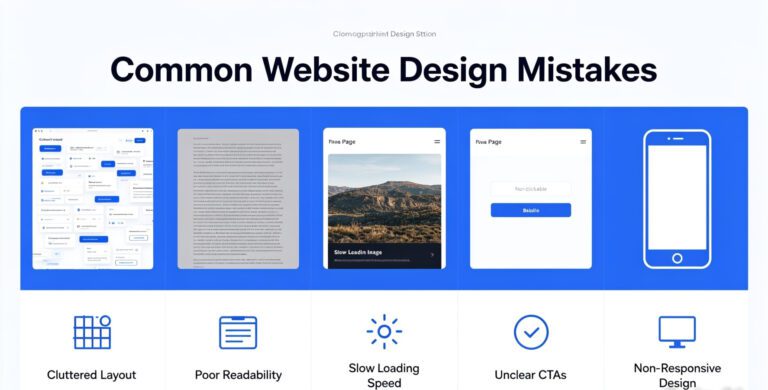
Despite the wealth of knowledge out there, you’d be surprised how many businesses still trip over the same wires. Here are a few facepalm-worthy mistakes I still see all the time:
- Unclear CTAs (Calls to Action): “Click Here” isn’t enough. What happens when I click? Be specific.
- Overdesigned UI: Just because you can animate everything doesn’t mean you should. Keep it lean.
- Mobile Fails: With mobile traffic accounting for over 63% of web visits (Statista, Q1 2025), there’s no excuse for sticky buttons and unreadable text on phones.
- Ignoring Loading Speeds: A sleek UI means nothing if your site loads slower than a Devon tractor in second gear.
- Poor Accessibility: Colourblind users shouldn’t have to struggle to navigate. WCAG compliance isn’t optional anymore. It’s best practice, full stop.
Real-life Devon Success Stories
Let’s give credit where it’s due. Here are two Devon businesses using UX/UI to their full advantage:
1. Totnes Wellness Co.
They completely reversed their bounce rate by rethinking how people seek information on their site. Booking a session used to take five clicks. Now it takes two. Not only did they see a 74% increase in conversions, but users began spending over twice as long browsing services.
2. Plymouth Craft Collective
Their homepage redesign doubled newsletter sign-ups within a week. Why? They replaced a generic layout with one focused on storytelling, clear visuals, and a clean, human-centric UI. They also made heavily data-driven choices. Using Hotjar insights to see where users were getting stuck. And addressed them in the redesign.
Tools and Best Practices to Stay Ahead in 2025
If you’re serious about levelling up your website, here are the tools and habits I swear by:
UX Tools:
- Hotjar – Great for heatmaps, visitor recordings, and user feedback.
- Figma – Ideal for prototyping and user journey mapping. Brilliant collaborative features.
- Maze – Painless usability testing and actionable data without needing big budgets.
UI Tools:
- Adobe XD or Sketch – Still industry standards for crafting stunning interfaces.
- Stark – Helps check accessibility compliance right within your design process.
Best Practices:
- Always start with user research. Real users will always surprise you.
- Design for mobile first. Not just smaller screens, but different behaviour modes.
- Use A/B testing often. What you think works isn’t always what really does.
- Maintain a style guide or design system. Consistency boosts trust.
- Don’t forget microinteractions. Small animations, responsive elements. Done right. Can make the UX feel delightfully polished.
Bring It All Together
UX and UI aren’t just design terms. They’re strategic tools that determine how people engage with your business online. If you’re a business owner in Devon trying to compete in an increasingly global digital market, neglecting either can cost you customers, money, and reputation.
The good news? You don’t need a Silicon Valley budget to make a real difference. What you need is empathy, the right process, and the willingness to test, tweak, and evolve.
So what’s holding your website back? If your gut’s telling you something’s off. Or if your bounce rates are quietly screaming at you. It might be time for a UX/UI health check. Let’s talk about how to make your website not just beautiful, but usable and impactful.
Need help diagnosing or redesigning your site? Give me a shout. I’ve helped plenty of Devon businesses turn their online experience from average to unforgettable. And I’d love to help you do the same.